
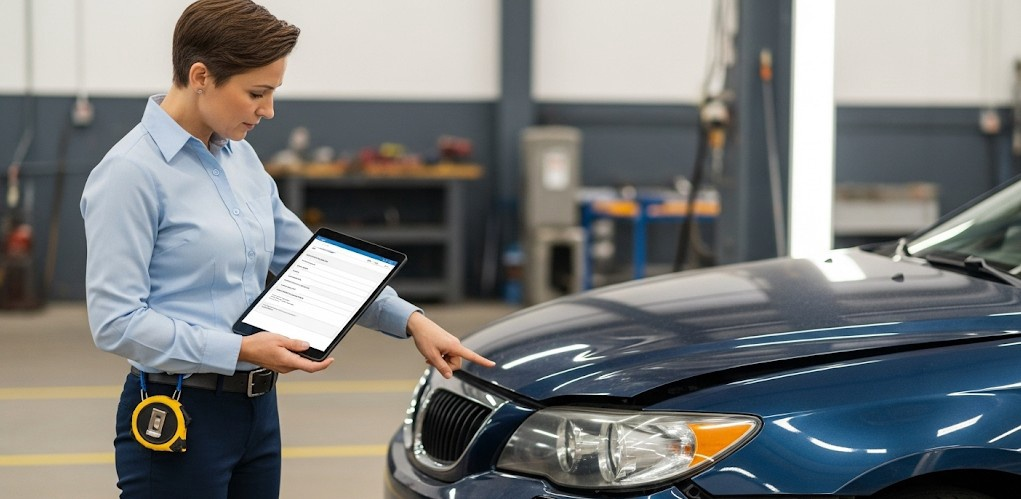
How to Become an Independent Auto Damage Appraiser
Complete roadmap from zero experience to paid independent appraisal work.
Independent auto damage appraisal is a practical path for people who want flexible work, measurable output, and a role that blends field inspections with estimating and communication. Most beginners can build a workable entry path in roughly three to six months by combining focused training, software practice, and a portfolio of sample work.
The profession involves inspecting damaged vehicles, identifying repair needs, writing estimates, and delivering reports that help claims move toward fair, documented outcomes. In some markets the role is field-heavy, while in others hybrid and virtual work are becoming more common.
Independent appraisers evaluate damage objectively, document photos and notes, and build estimates using industry software. A normal day can include assignment review, scheduling, inspections at shops or driveways, estimate writing, and communication with carriers or shops.
- Collision claims: crash-related repairs, hidden damage, suspension and structural considerations.
- Comprehensive claims: hail, flood, vandalism, theft-related damage, and non-collision events.
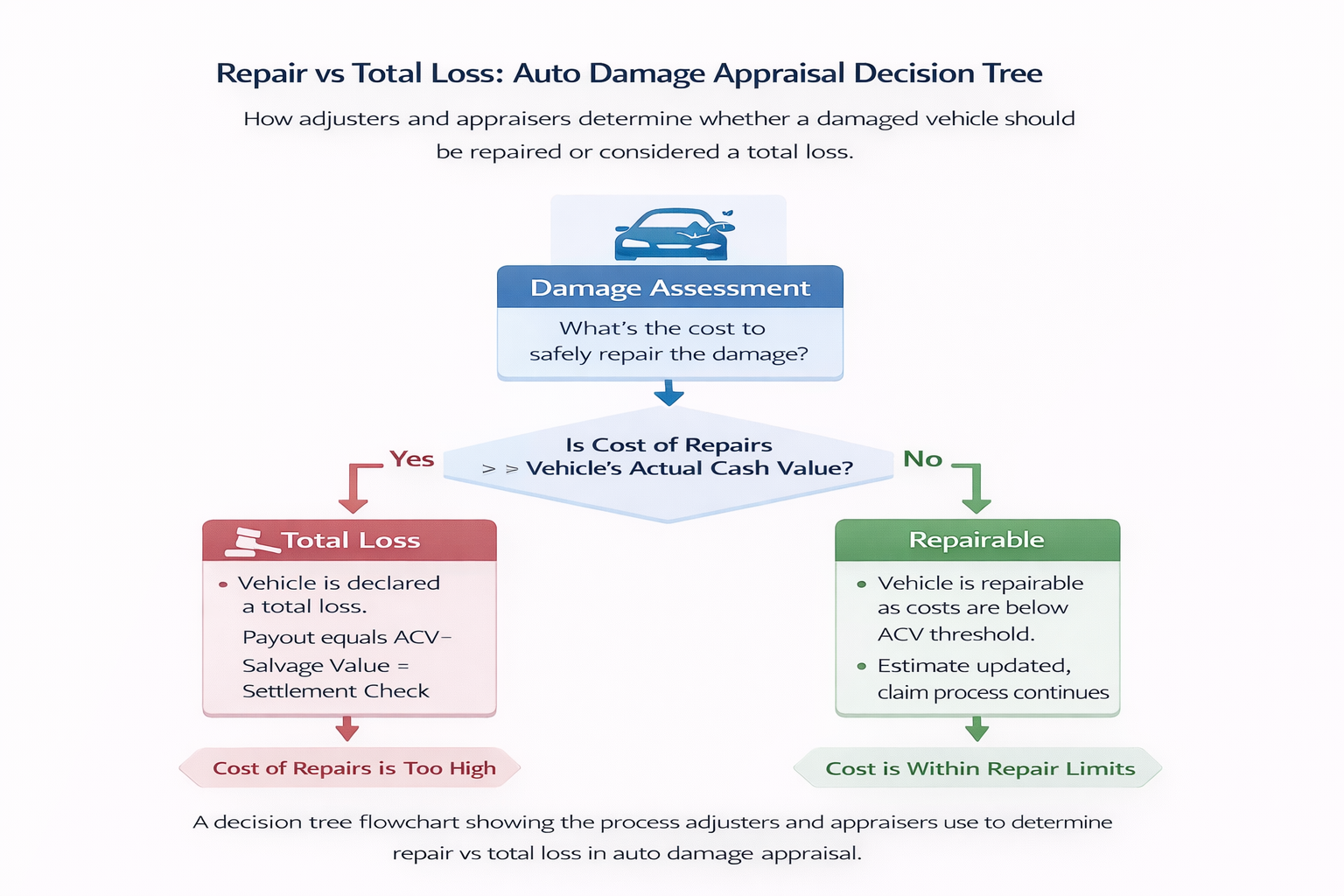
- Total losses: comparing repair cost to vehicle value under state or carrier rules.
- Specialty claims: antiques, RVs, commercial units, and EVs with battery and ADAS considerations.
The role rewards consistency more than genius. The fastest skill ramp usually comes from combining structured learning with repetition.
| Skill area | What matters | Fastest way to build it |
|---|---|---|
| Technical knowledge | Parts ID, repair methods, structural vs. cosmetic damage | Repair videos, manuals, junkyard walkarounds, body shop observation |
| Analytical ability | Labor logic, documentation quality, value judgment | Practice estimates, photo review, note-writing drills |
| Communication | Clear reports, follow-up, supplement discussions | Plain-English summaries and mock claim explanations |
| Digital proficiency | Estimating platforms, photo handling, templates | Vendor webinars, sample files, keyboard shortcut drills |
| Organization | Scheduling, routing, file control, deadlines | Calendar blocking and repeatable checklists |
A simple six-week plan works well: weeks 1–2 for vehicle anatomy and vocabulary, weeks 3–4 for hands-on inspection practice, and weeks 5–6 for estimate writing and software repetition.
No college degree is required. Most beginners benefit from 40 to 100 hours of structured training. A practical training stack often includes estimating instruction, repair literacy, and a working understanding of how claims move through the process.
| Program type | Strength | Watch-out |
|---|---|---|
| Beginner appraisal programs | Roadmap, mentorship, software exposure | May cost more up front |
| State-specific licensing prep | Useful for exam states | Can be exam-heavy and less practical |
| I-CAR style repair education | Improves repair literacy and credibility | Modular cost adds up |
| Vendor estimating courses | Software-focused and flexible | May lack mentorship |
Certifications can help signal seriousness, but state licensing rules matter most where an appraiser license is legally required. A practical sequence is simple: verify your state rules, complete the education or experience requirement, pass any required exam, apply, and track renewal and continuing education deadlines.
- Examples of licensing states: New York, Massachusetts, South Carolina, Delaware, Pennsylvania, and Nevada.
- Examples of states where a dedicated appraiser license may not be required: California, Texas, and Florida.
- Important: verify current rules directly with the relevant Department of Insurance or other state authority before acting.
Starting with no prior background is normal. A credible path often includes trainee roles, apprenticeships, mentorship, or related jobs in claims or body shop environments. A beginner portfolio can be built by creating sample appraisals with photos, estimates, and short written summaries.
- Build 20–30 practice appraisals and organize them neatly.
- Look for trainee or estimator roles with insurers or appraisal firms.
- Ask local shops whether shadowing or observational time is possible.
- Use each sample file to improve documentation and estimate logic.